Context
Pompeii was founded in the seventh or sixth century BCE, probably by Oscan-speaking peoples, and passed through Samnite and Greek cultural spheres before becoming a Roman colony in 80 BCE under the dictator Sulla. By the first century CE it was a thriving commercial town of perhaps twelve to fifteen thousand inhabitants, situated on the Bay of Naples in the fertile Campanian plain. Its economy rested on agriculture, wine production, the manufacture of garum (fermented fish sauce), and trade facilitated by its harbour. The town's public life centred on a monumental forum flanked by temples, a basilica, a macellum (market hall), and municipal offices, while its residential quarters ranged from modest tabernae to lavish aristocratic houses decorated with elaborate wall paintings and mosaic floors.
Vesuvius had been dormant for centuries before 79 CE, and most Pompeians seem to have been unaware they lived beside an active volcano. A severe earthquake in 62 CE caused widespread damage, and the town was still rebuilding when the eruption struck. The younger Pliny, writing to the historian Tacitus, left the only surviving eyewitness account, describing a towering column of ash, darkness at midday, and the death of his uncle, the elder Pliny, who had sailed across the bay to attempt a rescue. Modern volcanology classifies the event as a Plinian eruption — a term derived directly from that correspondence. The initial phase dropped pumice for hours; the lethal phase came with pyroclastic surges — superheated clouds of gas and rock travelling at high speed — which killed those who had not yet fled. Pompeii was buried under four to six metres of volcanic deposit, and its location was gradually forgotten until rediscovery in the late sixteenth century and formal excavation from 1748 onward.
What to Notice
The most immediately striking feature of the excavated site is the completeness of its urban fabric. Walking through Pompeii, one encounters paved streets scored with ruts from cart wheels, raised pavements, stepping stones for pedestrians, and the outlines of an entire Roman town plan still legible after nearly two millennia. The **Forum of Pompeii** remains the civic heart of the site: a long rectangular piazza once surrounded by colonnades, with the Basilica to one side, the macellum to another, and the Building of Eumachia — a fullers' guild hall — nearby. Standing in the Forum today, one can read the spatial logic of Roman public life: religious, judicial, commercial, and political functions all converging on a single open space, framed by Vesuvius itself on the northern horizon. A modern bronze centaur sculpture by the Polish artist Igor Mitoraj now occupies part of the Forum, its fractured classical form creating a deliberate dialogue between ancient ruin and contemporary art.
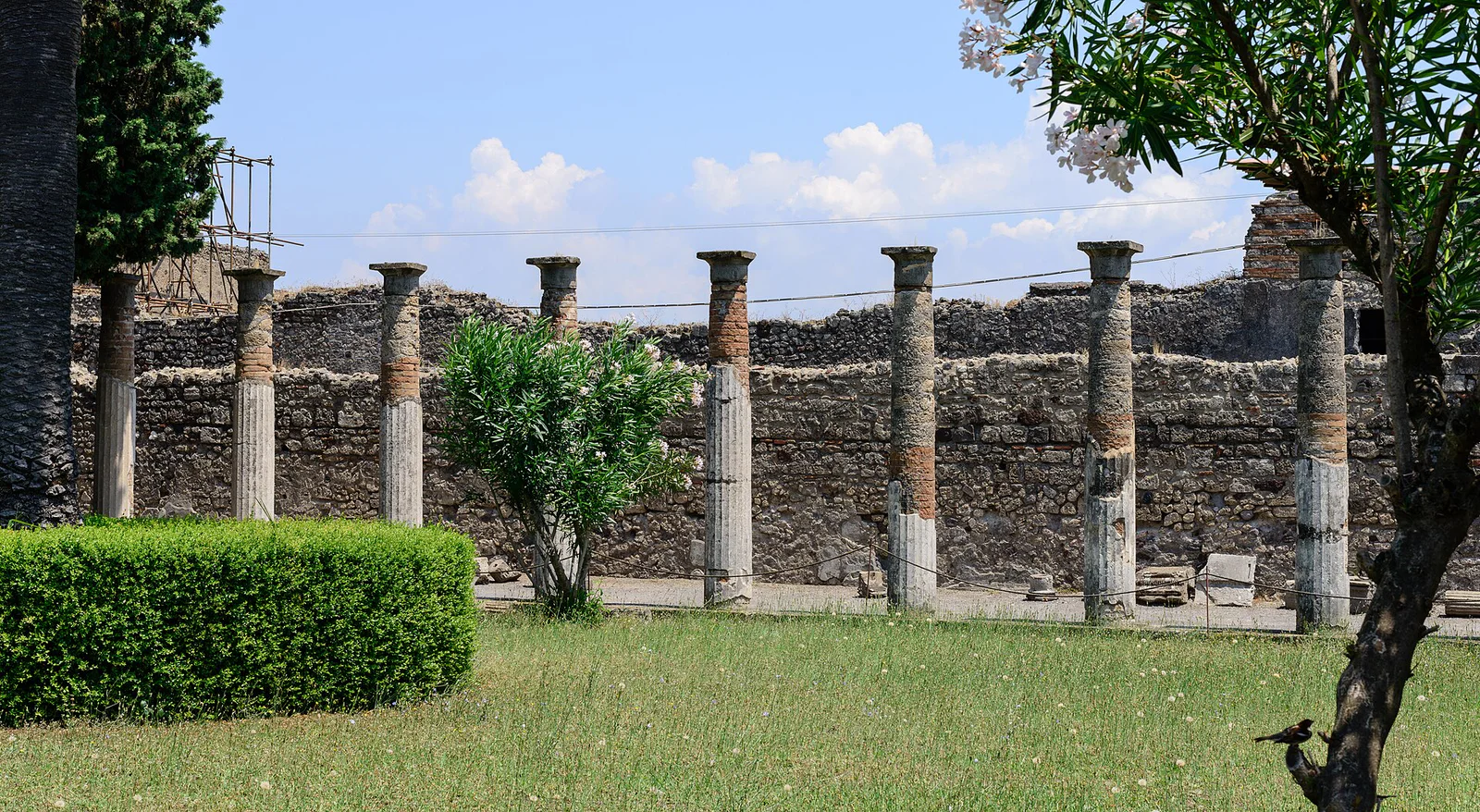
Domestic architecture provides an equally rich layer of evidence. The **House of the Faun** is the largest and most celebrated private residence in Pompeii, occupying an entire insula (city block). Its name derives from a small bronze statuette of a dancing faun found in the impluvium of the main atrium. The house preserves two peristyle gardens, multiple reception rooms, and — most famously — the site where the Alexander Mosaic was discovered, depicting the battle between Alexander the Great and Darius III. The surviving colonnades and garden remains illustrate the scale of elite Pompeian living and the integration of Hellenistic artistic taste into Roman domestic space.
Among the most affecting elements of the site are the **plaster casts of victims** created by the technique pioneered by Giuseppe Fiorelli in the 1860s. Fiorelli realised that the voids left in the hardened ash by decomposed bodies could be filled with liquid plaster, producing haunting three-dimensional records of the dead in their final postures — crouching, shielding children, or curled in agony. A celebrated nineteenth-century photograph by Giorgio Sommer documents several of these casts shortly after their creation, capturing the moment when archaeology crossed into something closer to forensic testimony. The casts remain among the most powerful visual documents of the eruption's human cost and continue to be studied with modern imaging techniques including CT scanning.
Points of Interest
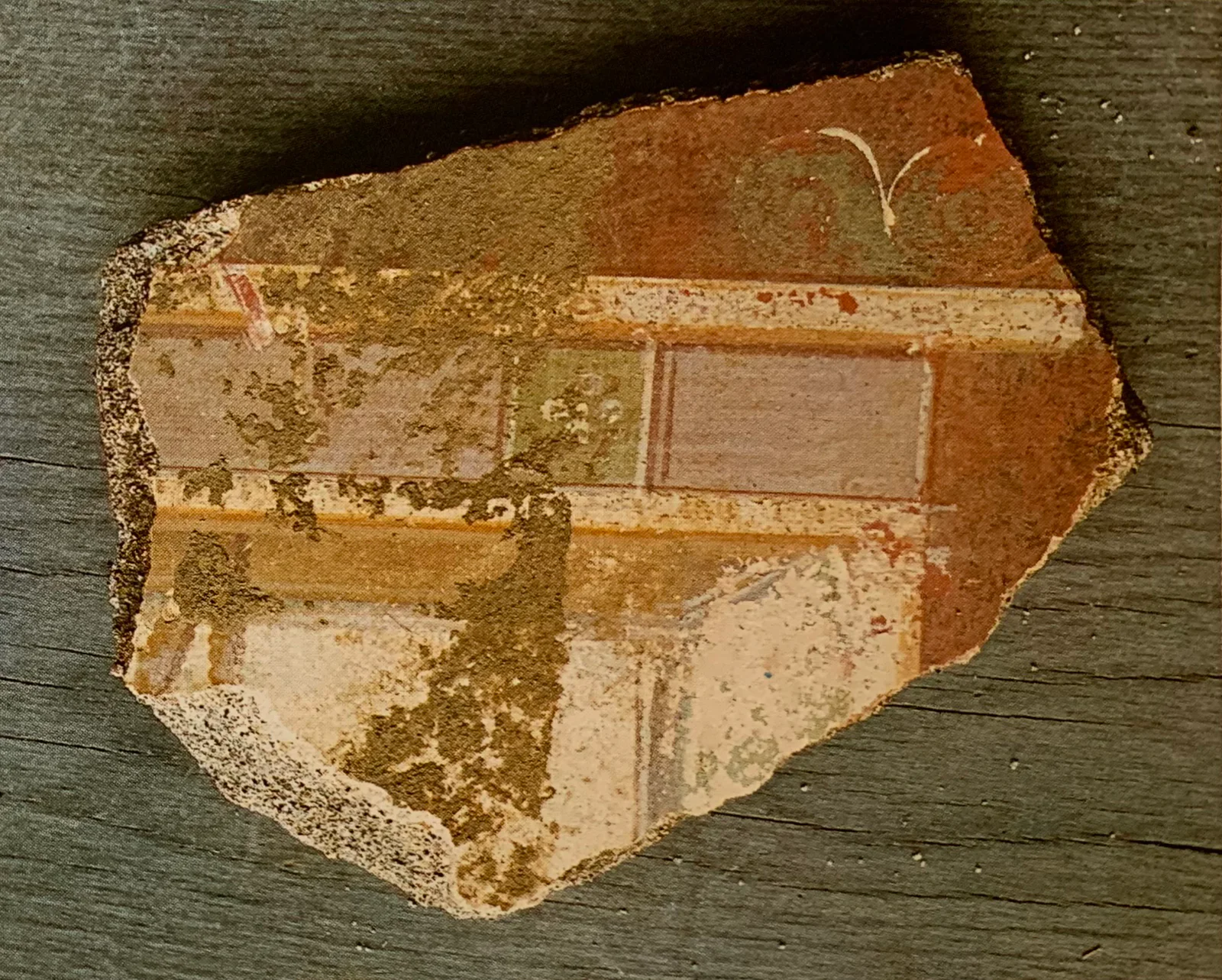
Pompeian wall painting has been central to the study of Roman art since the eighteenth century. Scholars traditionally divide the paintings into four successive styles, from the imitation of marble veneers in the First Style through the illusionistic architectural vistas of the Second Style, the delicate ornamental panels of the Third, and the fantastical compositions of the Fourth. Fragments from houses such as the House of the Labyrinth demonstrate the sophistication of domestic decoration even in residences that were not among the very grandest. These paintings preserve pigments, techniques, and iconographic programmes that would otherwise be entirely lost, since almost no Roman panel painting survives outside the Vesuvian cities.
Beyond art, the site yields evidence of everyday commerce, diet, religion, sexuality, and social hierarchy. Graffiti scratched into walls record everything from electoral slogans and love declarations to insults and accounting notes. Thermopolia — ancient fast-food counters — preserve the terracotta vessels in which hot food was served. Storage jars, or dolia, still stand embedded in shop floors, testifying to the grain, oil, and wine that sustained the town's economy. Each object, however modest, contributes to a cumulative portrait of Roman urban life that no literary source alone could provide.